Factory Fresh, 57 Years Later: Fender Vibrolux Reverb 1969 Full Inspection & Recap
A genuinely rare case: a 1969 silverface-era export-model Vibrolux Reverb that had never been opened since it left the Fullerton factory. No prior service, no prior repairs, nothing.
This one is a different kind of bench log. There’s no fault to chase and no disaster to undo — the job here was to inspect a genuinely untouched amp component by component, and make the judgment call on what fifty-seven years actually demands versus what’s still measuring fine. That distinction matters more on an amp this original than it does on almost anything else that comes across the bench.
What’s Actually Here
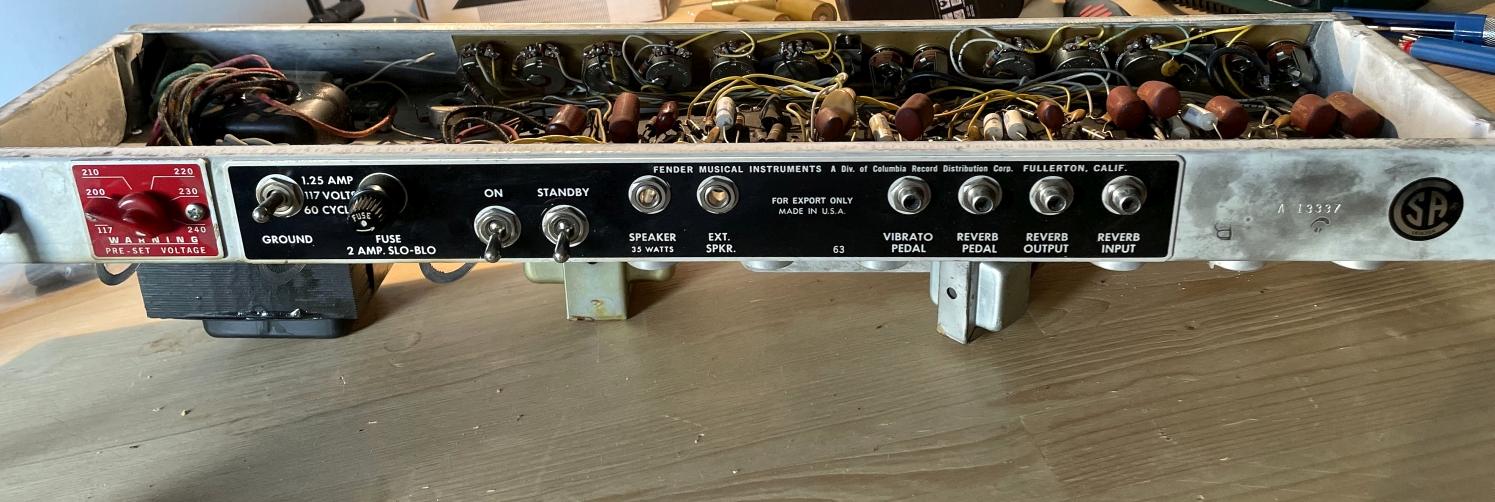
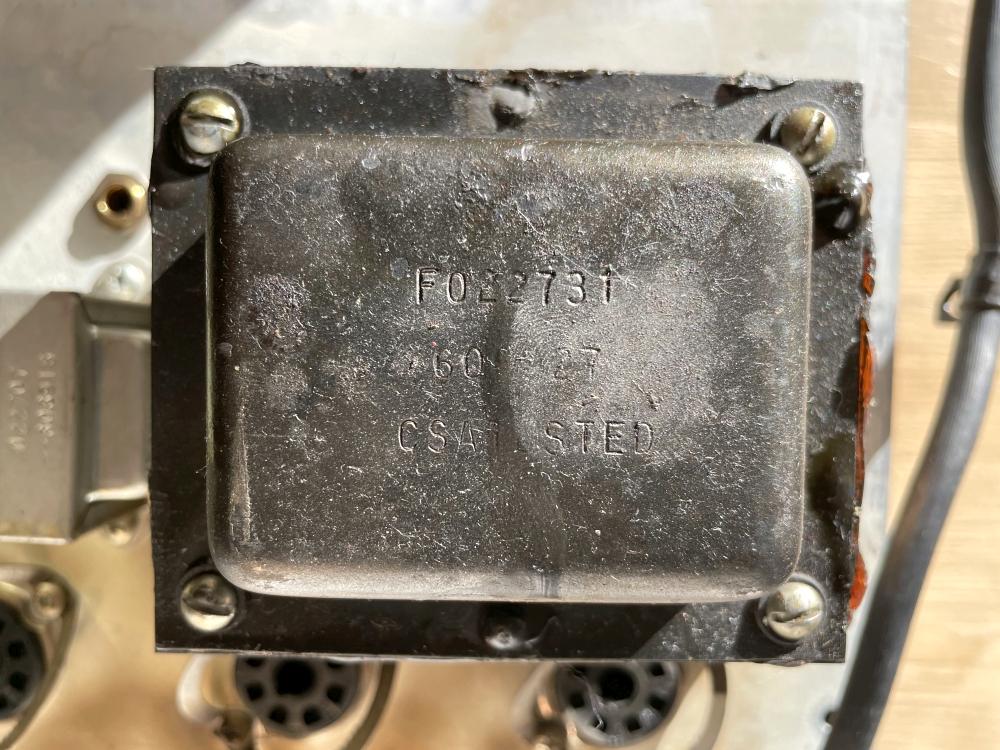
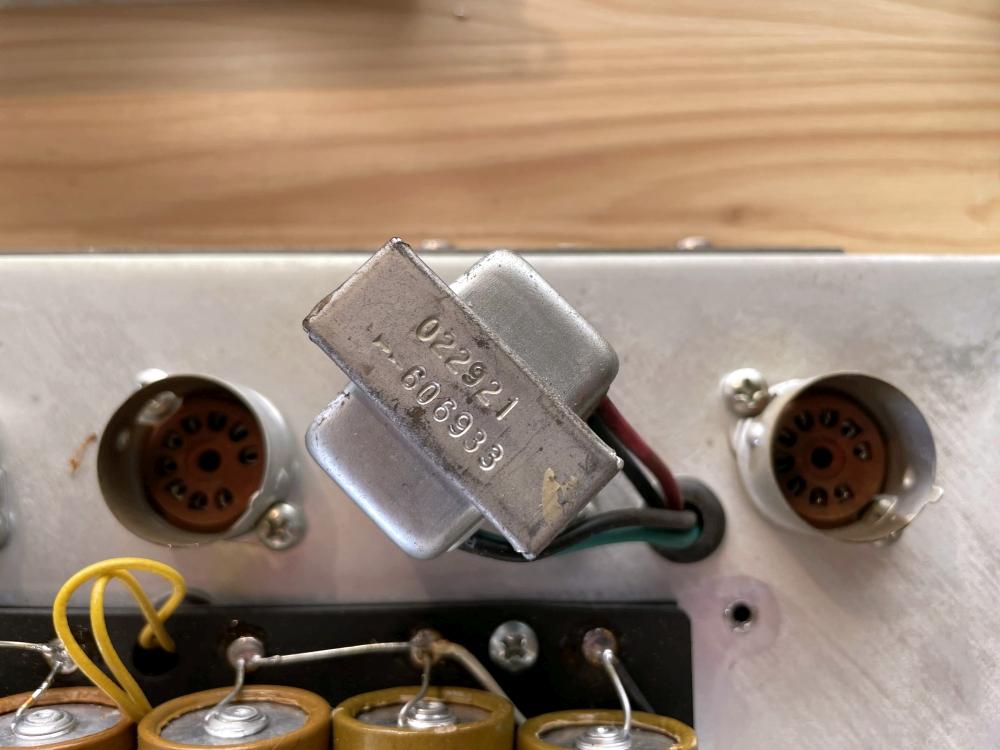
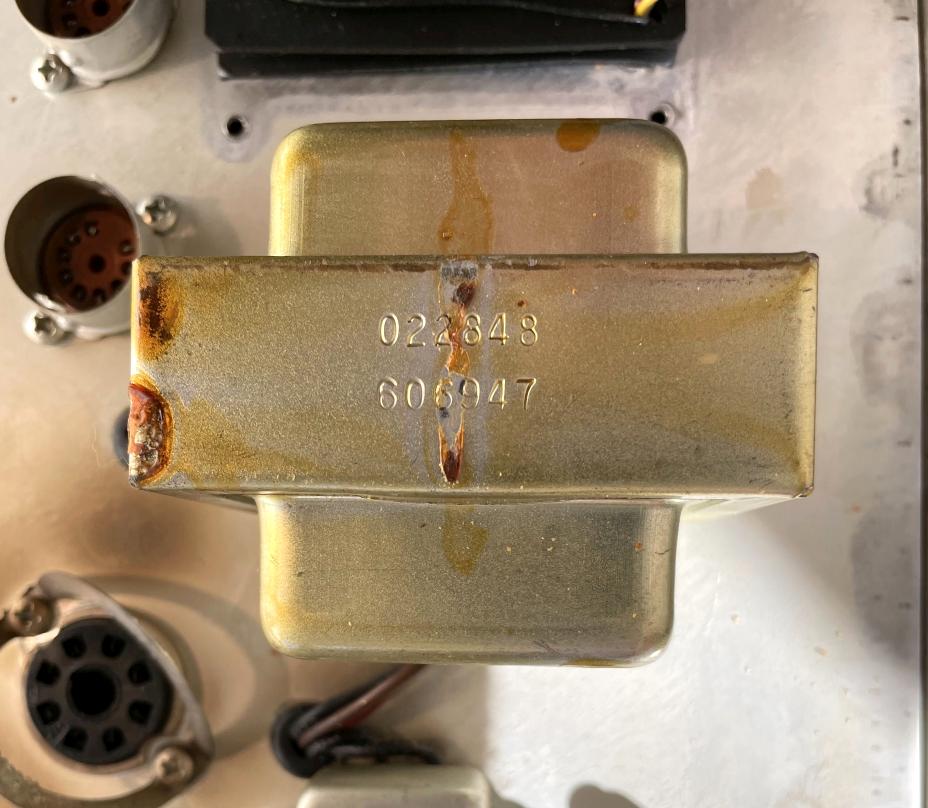
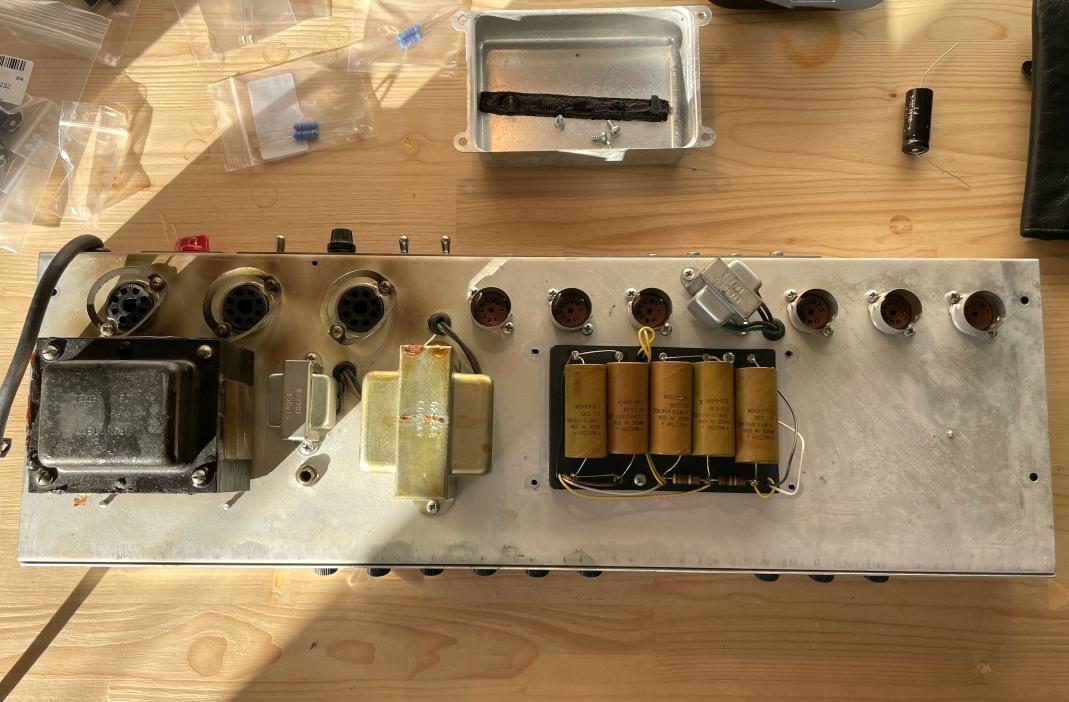
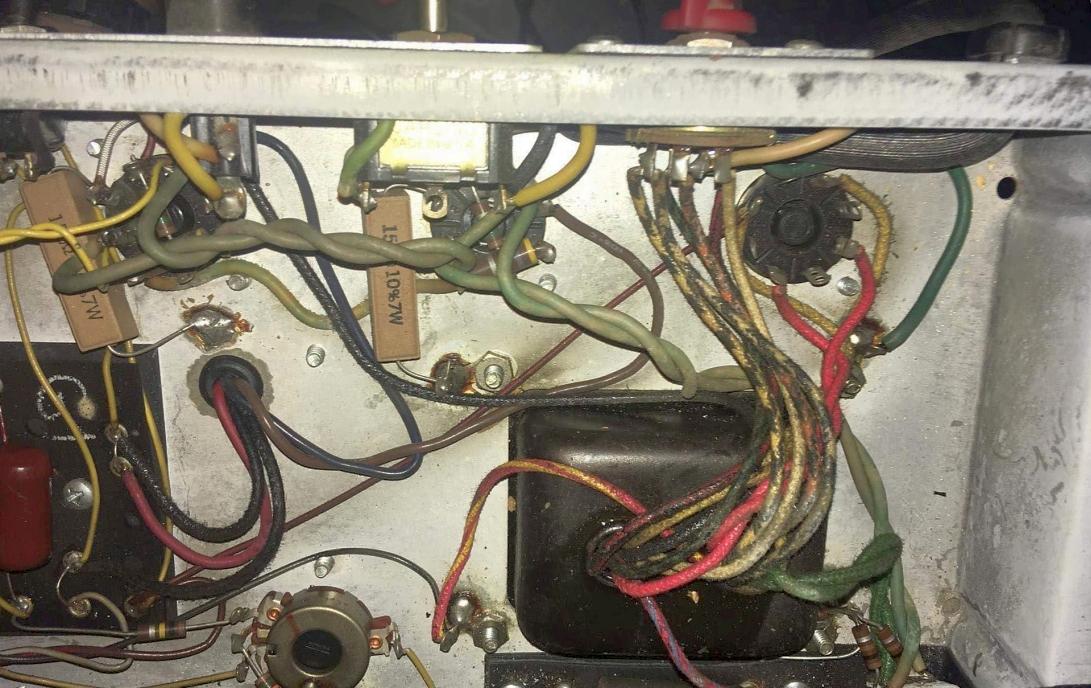
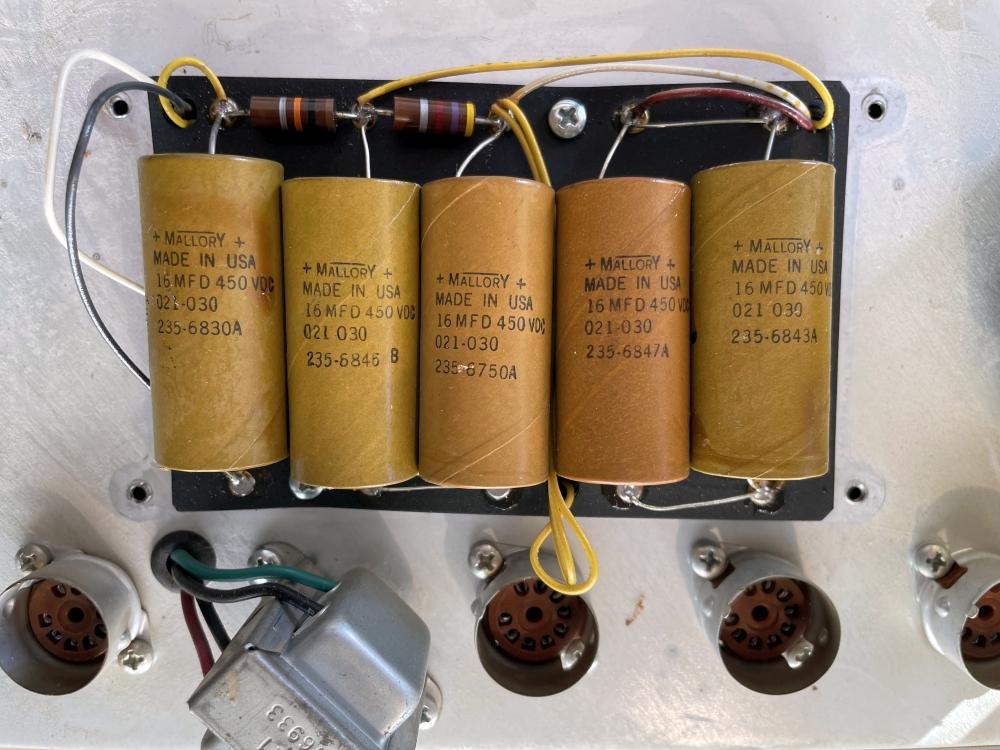
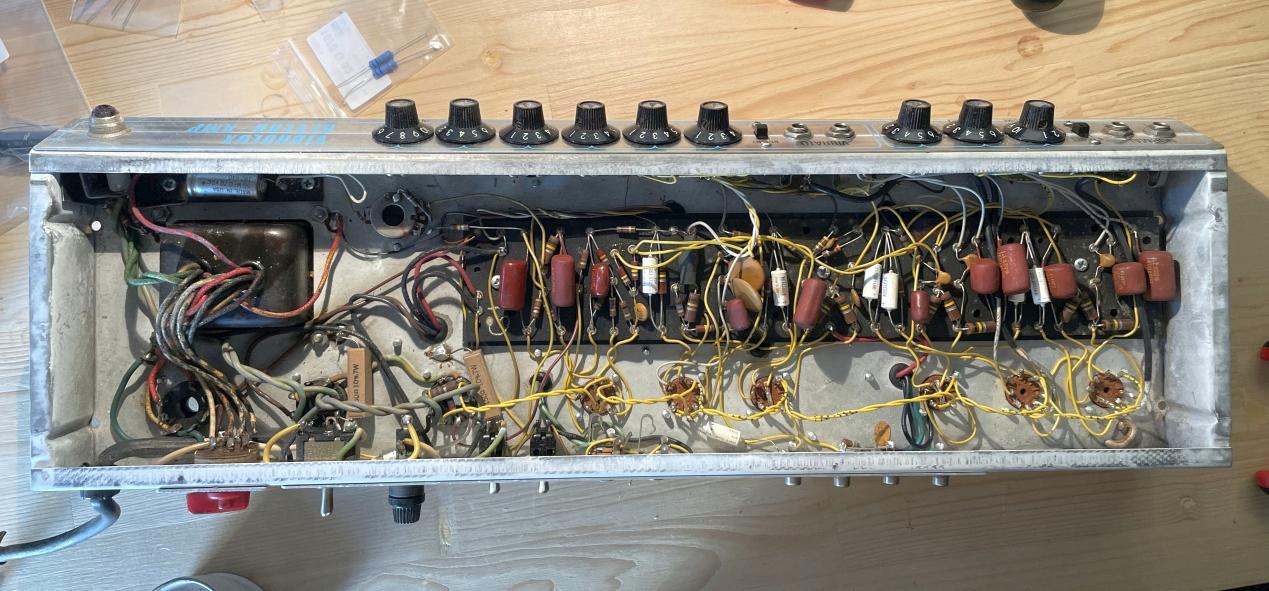
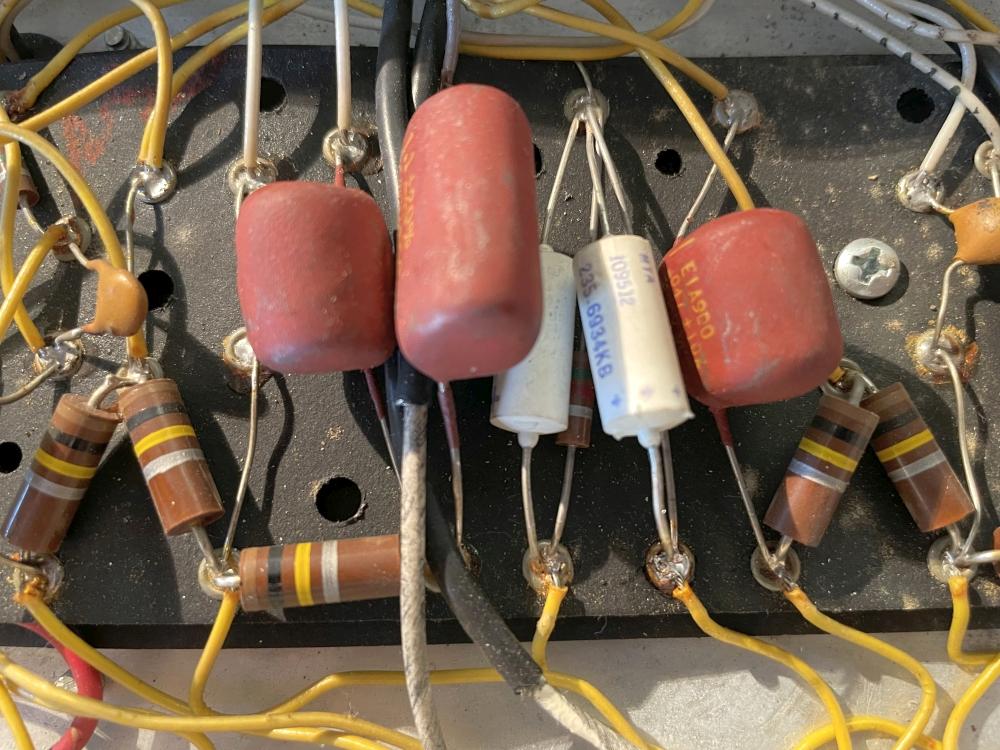
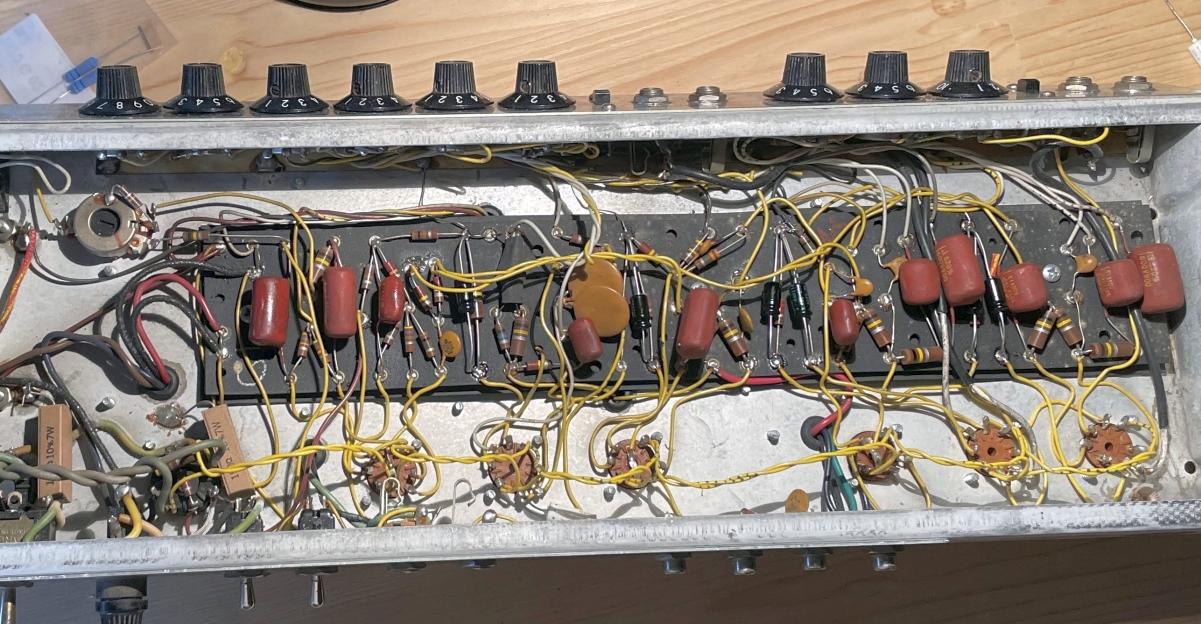
The back panel identifies this as a genuine export-market unit: “FOR EXPORT ONLY,” with a pre-set voltage selector covering 117–240V and its own serial number, A 13337. Every transformer carries its original Fender-stamped part and date code, still legible under decades of dust. Every capacitor on the board is exactly what left the factory with it — original Mallory doghouse caps, original coupling caps, original resistors, original wiring in the power supply. Nothing here has ever been touched by a tech.
The Case for a Light Touch
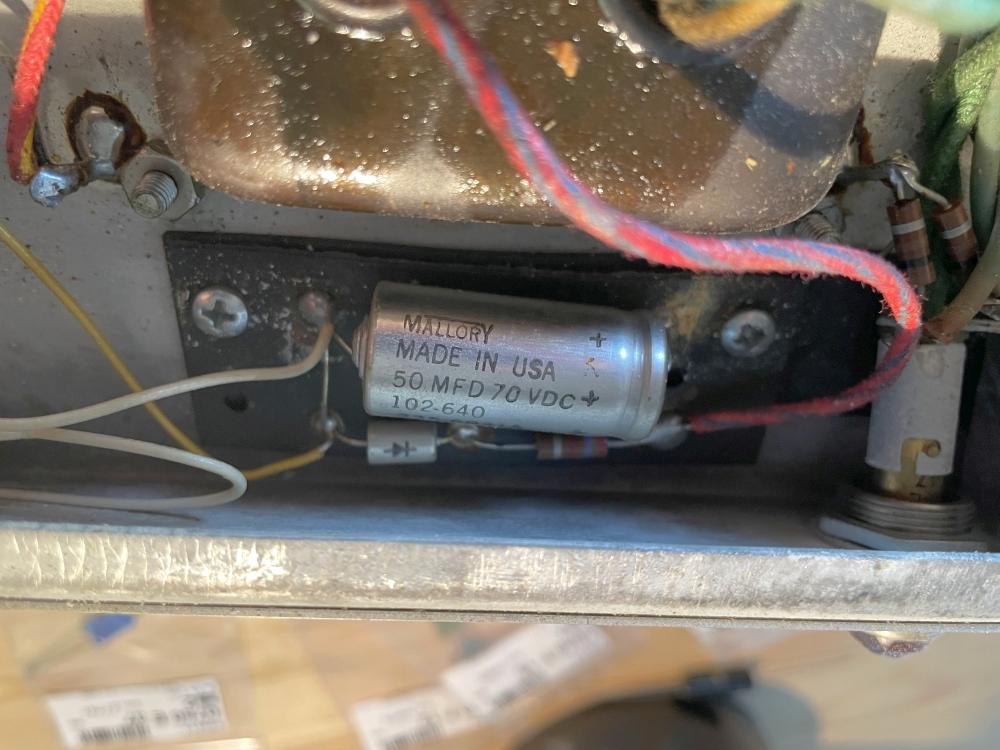
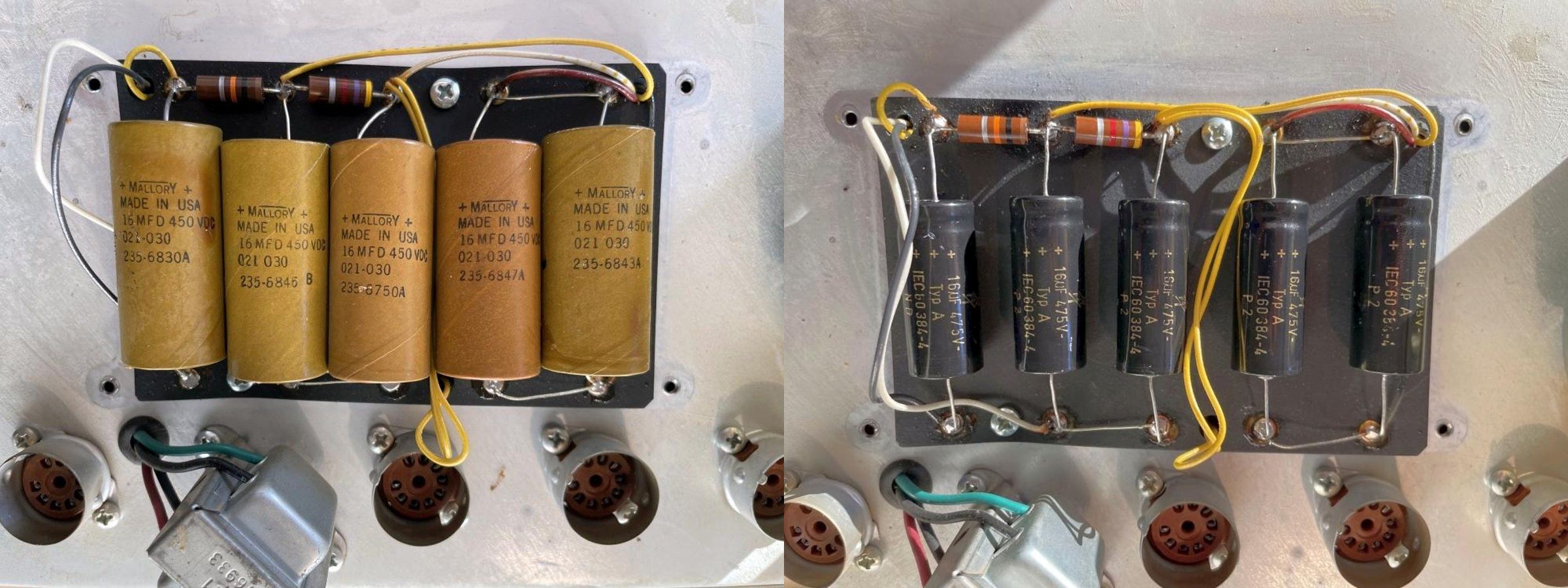
It would be easy to treat “full inspection” as an excuse to recap everything on principle. That’s the wrong call on an amp this original. Electrolytic capacitors dry out with age regardless of how little an amp was played — that’s a real, predictable failure mode worth getting ahead of, wherever those caps sit on the amp. Film and paper coupling caps and carbon composition resistors age very differently; when they’re still reading within spec after this long, replacing them removes original, correct-sounding, still-functional material for no real benefit. Every resistor and every capacitor on this board got checked against what it should read. Every electrolytic — doghouse filter caps and the eyelet board’s own electrolytics alike — came out and was replaced with fresh F&T caps. Everything else that tested good, including the original coupling caps and resistors, stayed exactly where it was. The tube complement got the same treatment: every tube in this amp is the original vintage RCA set, and every one of them measured in genuinely good condition on the tester — no reason to touch a set of tubes that healthy.
The Doghouse Recap
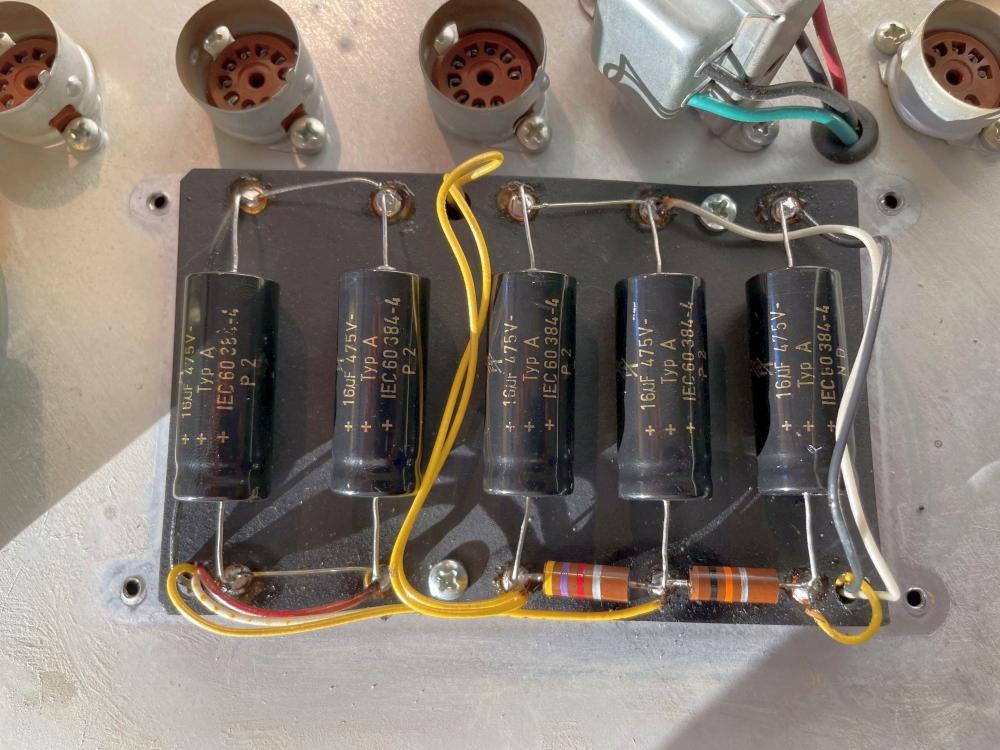
The doghouse filter cap board is the part of any amp this age that’s most exposed to time — electrolytics dry out over decades whether the amp was played or not. The original Mallory cans came out as a set and were replaced with fresh F&T electrolytics, cleanly dressed and wired back exactly to the original layout.
Recapping the Eyelet Board
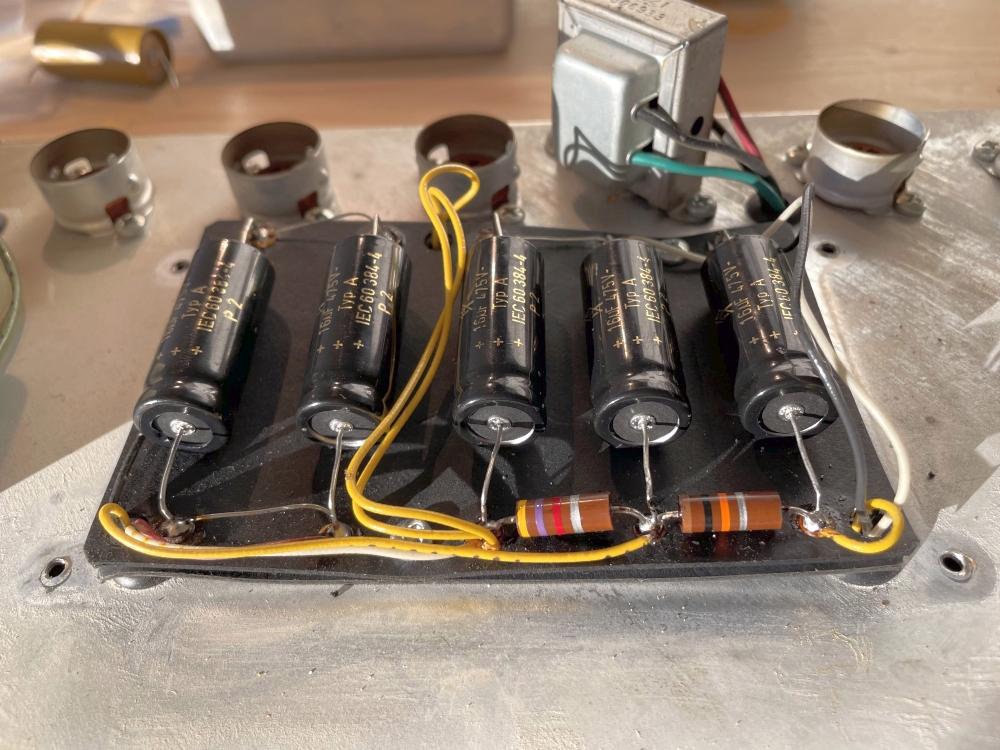
The eyelet board carries its own electrolytics too, separate from the doghouse filter caps — and they age by the same clock. Every electrolytic on the board was replaced with fresh F&T caps, wired back into the original layout alongside the film coupling caps and resistors that tested good and stayed in place.
First Power-On and Bias
With the recap done, the first power-up went through a current limiter rather than straight into the wall — a genuinely sensible precaution on any freshly serviced vintage chassis, and especially one that had never run on fresh filter caps before. Once the amp proved stable, bias was set using bias probes reading directly at the output tube sockets, dialed to 65% of the tubes’ max plate dissipation. That’s a comfortably safe, measured target rather than a guess — and with the original RCA tubes already confirmed in good health, it’s exactly the number that lets them keep doing what they’ve been doing since 1969.
Inspection & Recap Summary
- Identified as a genuine export-market unit: pre-set voltage selector, export-only back panel, serial A 13337.
- Every resistor and capacitor on the eyelet board checked against spec before any decision was made about what to replace.
- Every electrolytic capacitor replaced with fresh F&T caps — doghouse filter caps and the eyelet board’s own electrolytics alike, the parts genuinely at risk from age alone regardless of how little the amp was used.
- Original film coupling caps, resistors, and wiring left in place — tested good, and original material on an amp this rare is worth more than a blanket recap.
- Full set of original vintage RCA tubes tested and kept — every tube measured in genuinely good condition, no reason to replace a healthy original set.
- First power-on through a current limiter, biased with bias probes to 65% of max plate dissipation — a measured, safe target rather than a guess.
- No prior service found anywhere on the chassis — every part, every solder joint, is exactly what left the Fullerton factory in 1969.